
The One-Sentence Rule, and Why It Doesn't Always Hold
If your garage door opens and closes smoothly, seals tight against the weather, and sits balanced on its springs, it's ready for winter. That's the rule most homeowners can go by. The exceptions are the doors that have been quietly dragging their feet all fall — sticking a little on cold mornings, letting in a draft along the bottom, or groaning when the opener kicks on. Those small signs tend to turn into real problems the first time temperatures swing from a humid 60 degrees to a hard freeze overnight, which is exactly the kind of weather Middle Tennessee throws at garages between November and February.
Check the Weatherstripping Before the Humidity Swings Start
Spring Hill summers are hot and humid, and that moisture doesn't just disappear when the leaves fall — it lingers in the ground, in pine debris around the garage slab, and in the air itself during our frequent heavy rain. When that humidity meets a sudden cold snap or ice storm, any gap in your door's weatherstripping becomes an entry point for cold air, water, and even small pests looking for shelter.
- Run your hand along the bottom seal and side weatherstripping, feeling for cracks, flattening, or sections that have pulled away from the track.
- Look for daylight around the edges of the closed door — a flashlight test from inside the garage at dusk works well.
- Replace brittle or torn seals now. Weatherstripping is inexpensive and takes less time to swap than it does to drive to the hardware store.
Lubricate Hardware While It's Still Easy to Reach
Cold weather thickens old lubricant and makes metal parts contract slightly, which is why doors that ran quietly in October sometimes start squealing or hesitating in December. Rollers, hinges, and the torsion spring itself all benefit from a fresh coat of garage-door-specific lubricant (not WD-40, which is a cleaner, not a lubricant, and will actually dry these parts out faster).
- Wipe down tracks to remove summer pollen residue and dust before applying anything new.
- Lubricate rollers, hinges, and springs — avoid getting lubricant on the belt or chain of a belt-drive opener.
- Tighten any hardware that has loosened; the freeze-thaw cycle we get with Tennessee's occasional ice storms works bolts loose over time.
Pay Attention to Spring Balance Before the Weight Changes
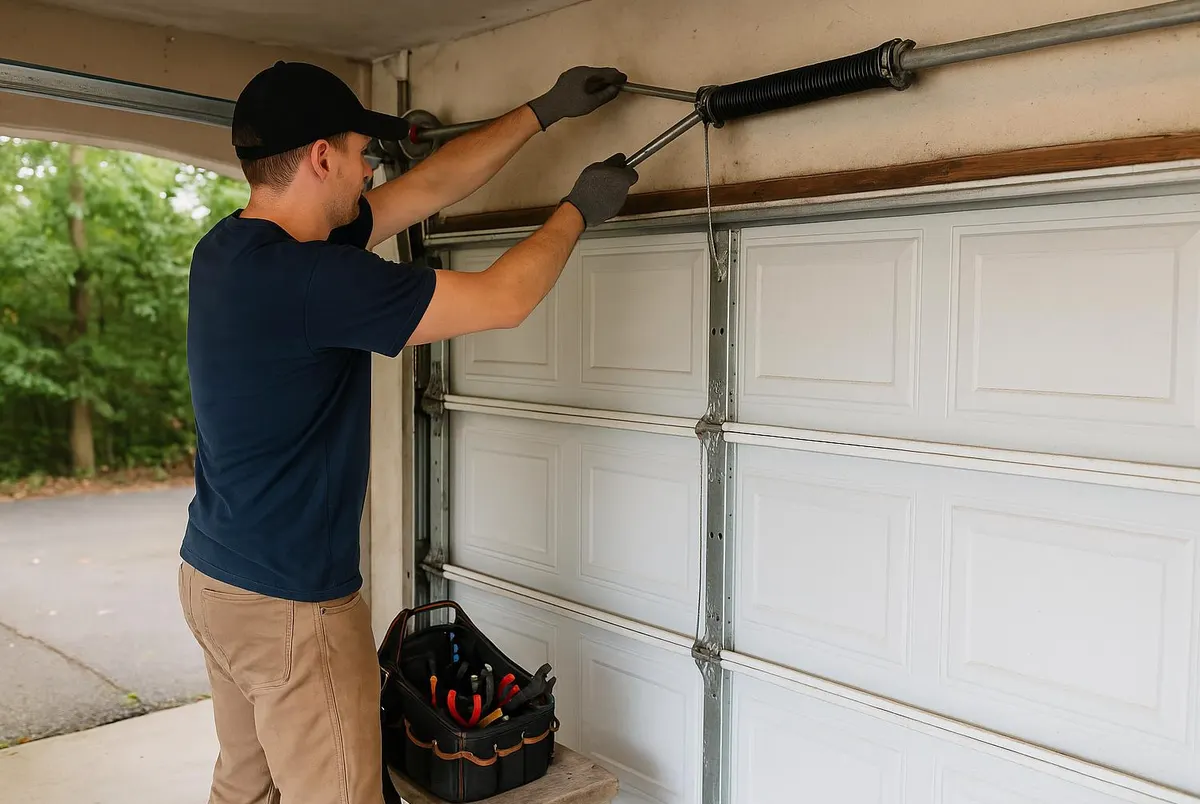
Steel springs lose a bit of flexibility in cold temperatures, and a door that was already borderline on balance in October can become a real strain on the opener once an ice storm adds extra weight from frozen moisture on the panels. Test your door's balance by disconnecting the opener (pull the emergency release cord) and lifting the door halfway by hand. It should stay in place on its own. If it drifts down or shoots up, the spring tension is off, and that's not a DIY adjustment — torsion springs are under enough force to cause serious injury if mishandled.
Give the Opener and Sensors a Once-Over
If your opener has a battery backup, check it now, not after a storm knocks the power out — remnants of tropical systems and winter ice storms both have a history of taking down power lines inland, and a dead backup battery means a garage door that won't open at all when you need it most. Also inspect the safety sensors near the bottom of the tracks; heavy fall rain and wind can knock them slightly out of alignment, and a misaligned sensor will cause the door to reverse or refuse to close, which is a bigger annoyance on a freezing night than on a mild one.
Think About Condensation If Your Garage Is Attached
Homes with attached garages in this area often see condensation build up on the garage door itself when warm, humid indoor air meets a cold metal panel — the same principle as a cold glass of tea sweating in July, just reversed. Over time, that moisture can contribute to rust on hardware or hinges, especially combined with the pine needles and dampness that tend to collect around garage foundations here. A space heater isn't a fix; better airflow, and in some cases added insulation on the door panels, addresses the actual cause.
When to Call Spring Hill Garage Door
Some of this is a Saturday-morning project — lubrication, weatherstripping, a visual inspection. But if your balance test shows a problem, if the door is noticeably heavier or slower than it was a few months ago, or if you're hearing new noises during the lift, that's a job for a trained technician rather than a guess-and-check approach. Our Garage Door Maintenance service covers a full inspection of springs, hardware, and opener function before winter weather puts extra strain on all of it. And if an ice storm does knock your door off track or your opener dies overnight, our Emergency Garage Door Service means you're not stuck waiting days for someone to show up with a freezing garage and an unsecured home.
If you're in Spring Hill, Thompson's Station, Franklin, Columbia, Brentwood, Nolensville, Chapel Hill, or Lewisburg and want your garage door checked before the next cold front rolls through, give Spring Hill Garage Door a call. We'll show up on time, tell you straight what needs attention, and get it handled before winter makes the decision for you.